Anatomy of a pastel landscape
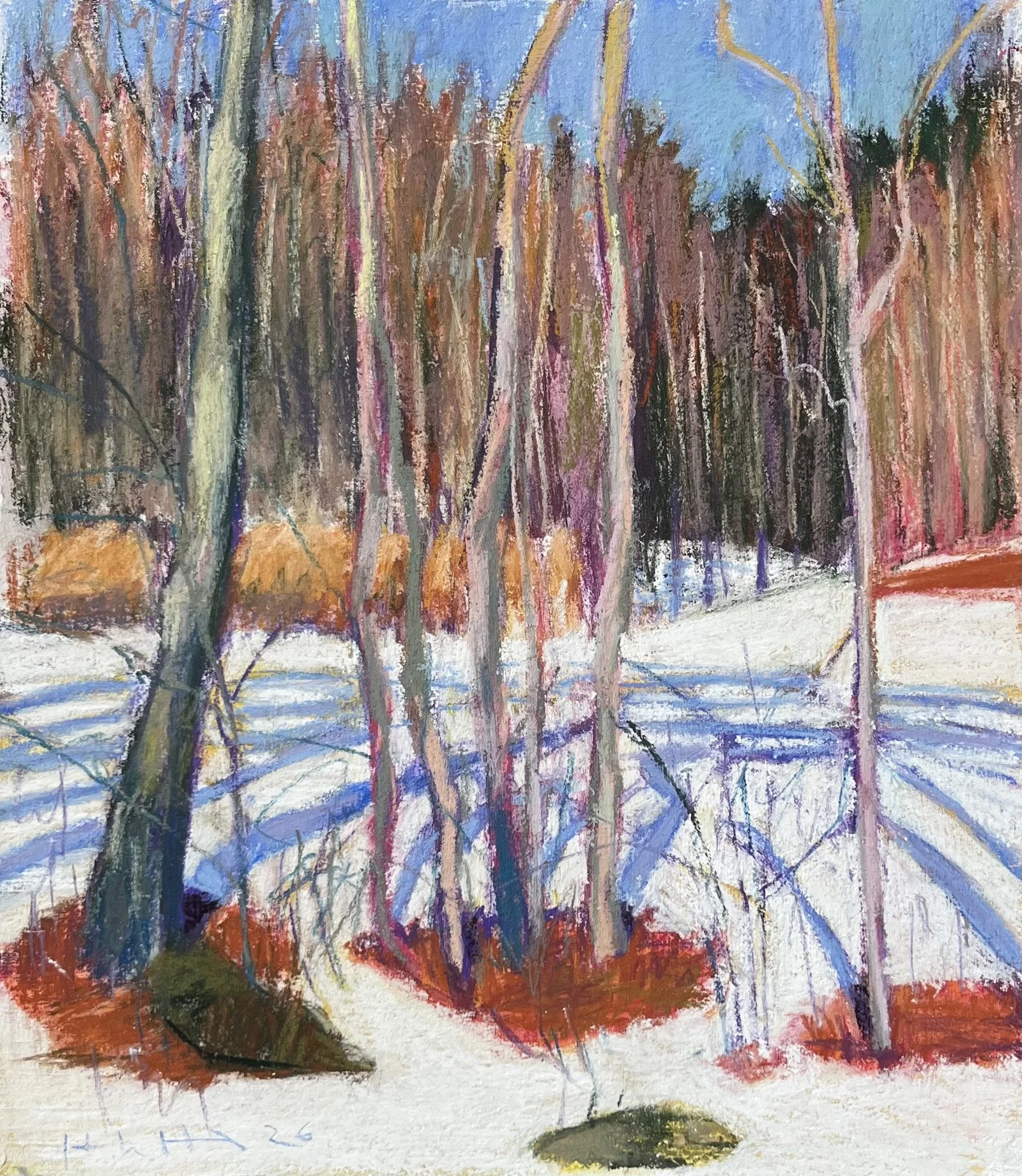
“March Melt” 2026, soft pastel on gessoed paper, 11 × 10”, $400
A little peek behind the scenes. First of all, you gotta get the timing right. I was on the lookout for a day warm enough to be outside painting (for me that’s about 50 degrees Fahrenheit) with snow still on the ground AND with enough free time to get a painting in (that means two hours absolute minimum, with setting up and breaking down and having a good hour to paint).
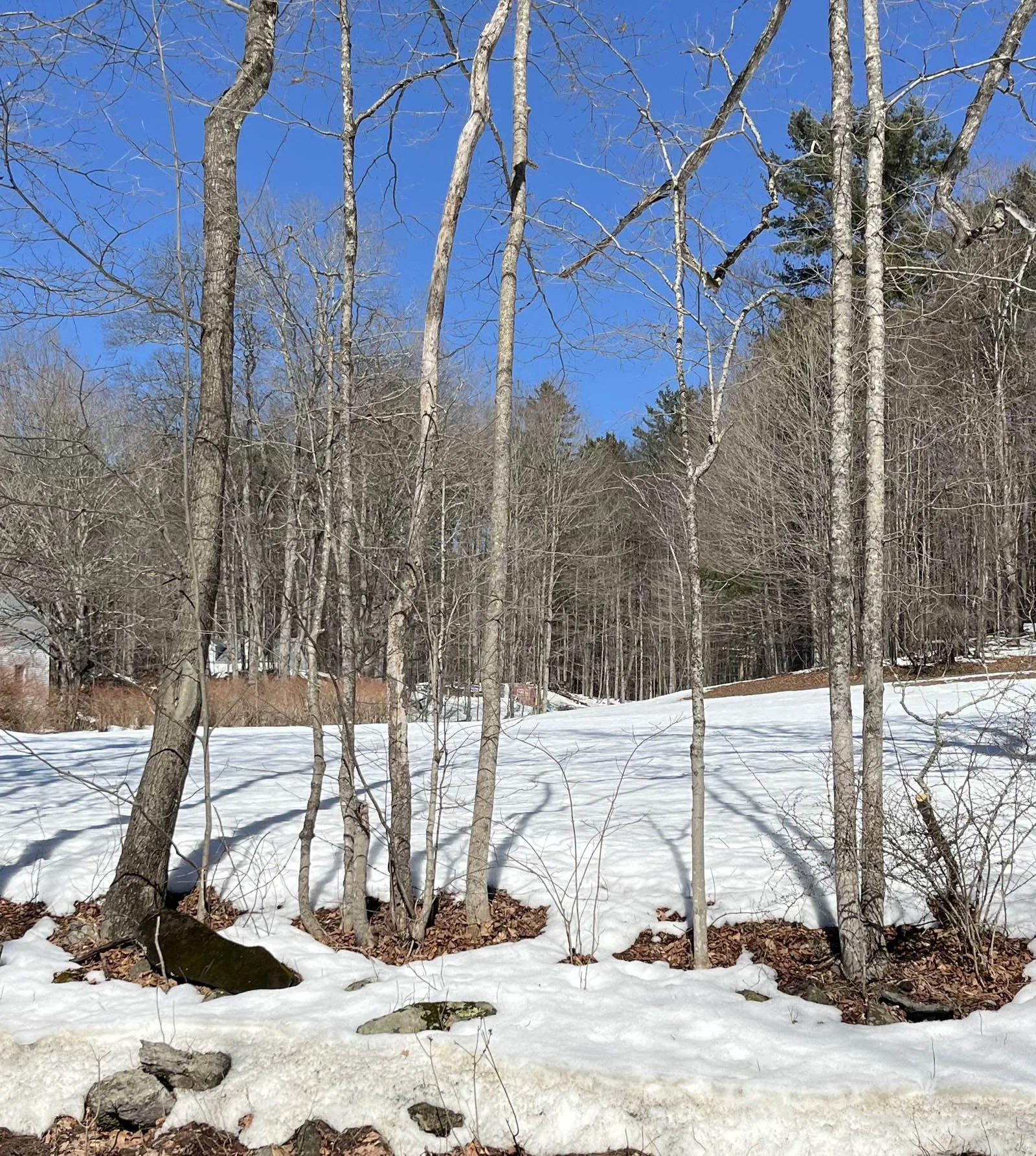
Here’s my view. My camera doesn’t do justice to the colors I swear were there! That’s why I paint en plein air when possible and not from photos.
Such a day arrived. Yay! I absolutely love the color of shadows on snow in late winter/early spring. Sugaring season shadows. A blue-purple. Out I went. Find a spot. Gotta be in the shade and have a view compelling enough to paint. Found it, kind of, in the shadow of a maple across the street. Of course, this shadow kept moving. I’d insert a shrug emoji here if I could.
Okay, step one: establish an underpainting. Using hard pastels (I use Nupastels) I worked as quickly as possible knowing light conditions and shadows would be changing rapidly. Established my composition and some colors—I made the snow yellow because it was a warm white with the sunshine on it. I knew I’d be going back over that with layers of white and wanted the yellow to shine through.
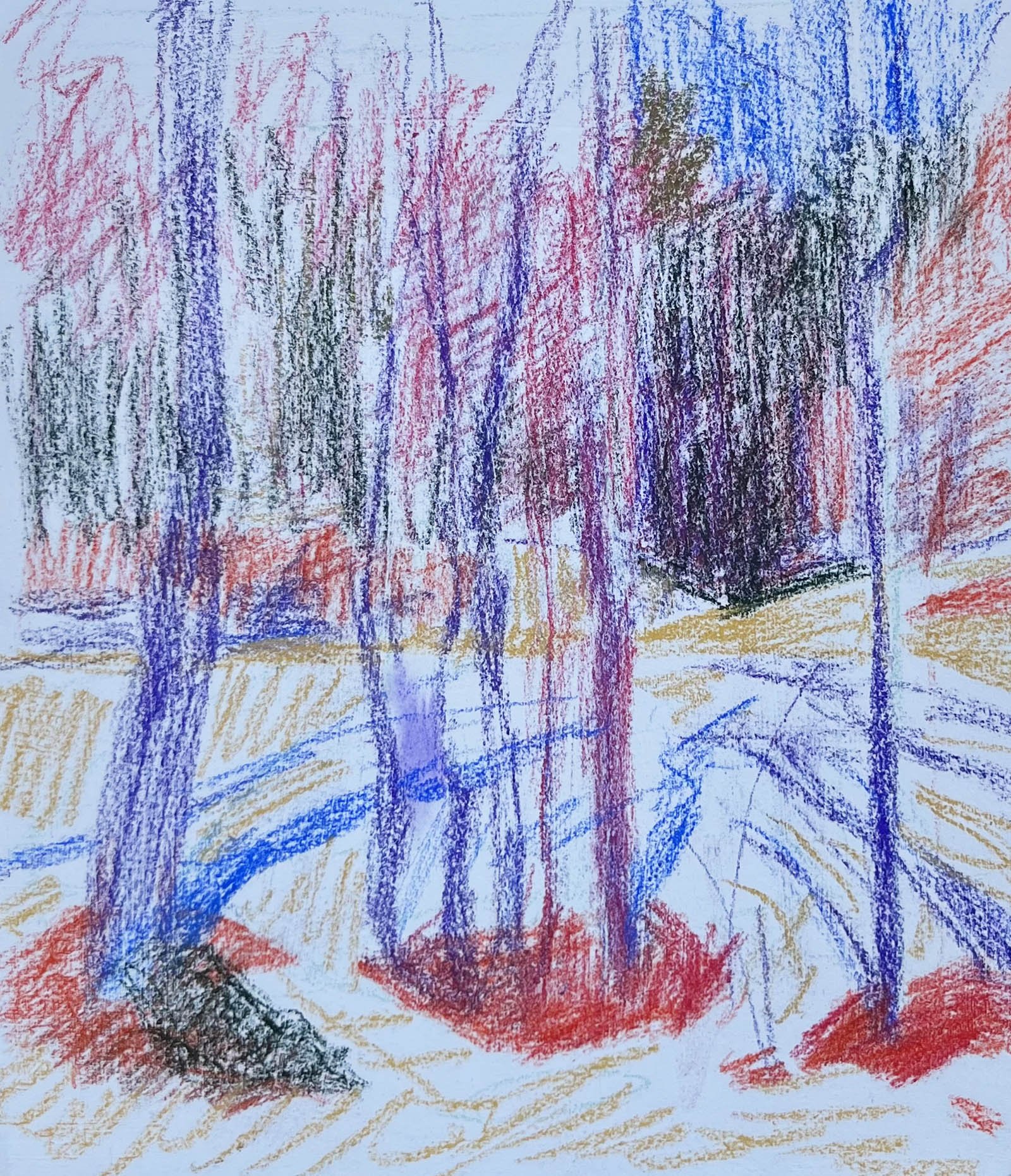
initial sketch establishing composition
Step 2: take a brush with rubbing alcohol and fix the sketch into an underpainting.
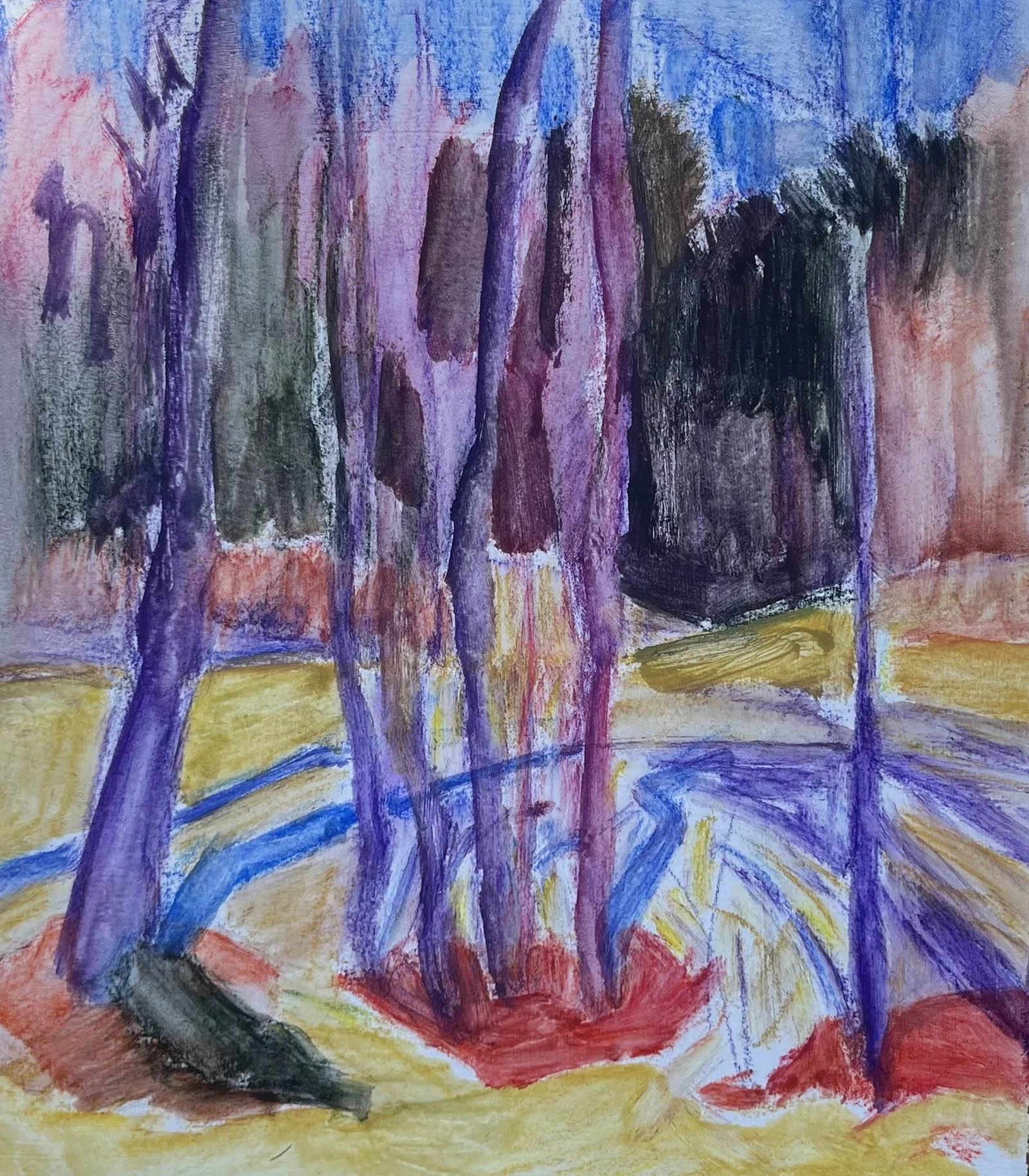
Okay! Now the underpainting is fixed. I will be true to this composition even as the shadows move.
Once the underpainting is fixed, I continue to work with hard then medium-hard pastels, starting with my darks then my medium tones. I was pulled into a bit of a frenzy because the shadow I was standing in kept moving, as did the shadows in my view. So I worked fast and loose and used my underpainting as my fixed composition, not allowing myself to change the picture to match the new situation. Sorry I don’t have more process pics, but this was a race against time!
Eventually I got to my softest pastels and my lightest values. My softs include Schmincke, Sennelier, and Terry Ludwigs. My mediums are generally Rembrandts.
I try to stick to the advice of my teacher Mary Giammarino, who says, “If it doesn’t suck, stop.” In about an hour I felt the painting did not suck, and the light conditions were also just kaput. So, here’s the point at which I stopped:
And there you have it :-)